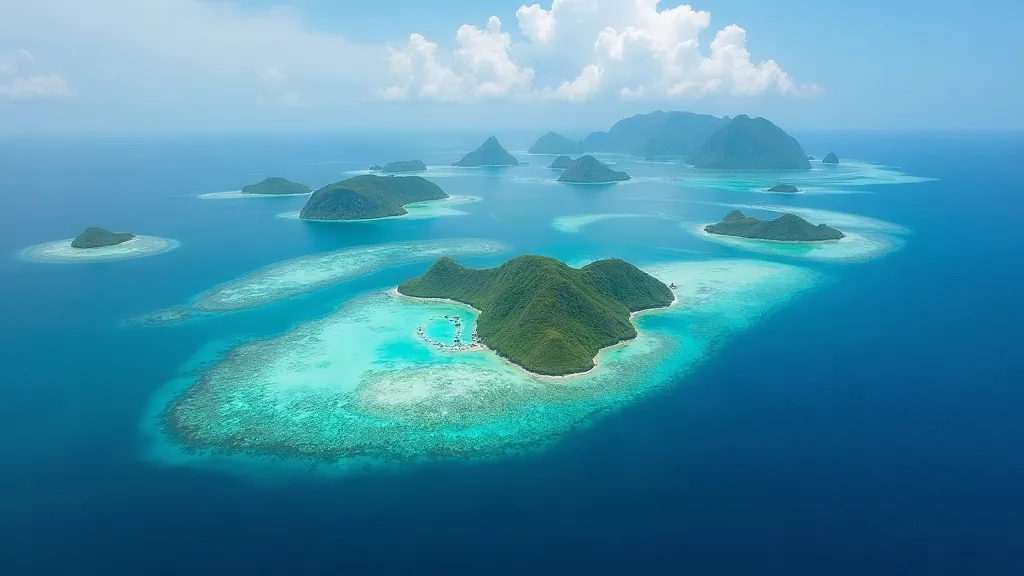
For planning purposes Raja Ampat divides into four zones: the Dampier Strait core around southern Waigeo, the quieter Batanta and Salawati area, the remote northern islands, and Misool to the south. They differ in distance from support, weather exposure, self-sufficiency required and what they offer. Almost every successful itinerary is built as core-zone work plus one or two expedition legs, sequenced by season — not as a single loop through all four.
Zone one: the Dampier Strait core
Southern Waigeo and the strait between Waigeo and Batanta. This is where a season lives. Highest density of quality dive sites, the concentration of the conservation mooring network, closest to Waisai for crew and stores, and the shortest logistics tail back to Sorong.
Character: strong tidal streams that make the diving and complicate the seamanship, as covered in the piece on why the current makes the diving. Short hops between sites. Busy by Raja Ampat standards, with liveaboards, dive boats, local craft and the ferry.
Who it suits: everyone. Vessels with modest range can do a full and excellent programme here and nowhere else, and many should.
Zone two: Batanta and Salawati
Immediately south and west of the strait. Quieter, with river mouths and mangrove systems that change the water and the seabed. Some genuinely sheltered inner anchorages, useful when the strait is uncomfortable.
Character: more terrestrial interest, with birdlife and forest, and a different feel from the pure reef geography further north. Run-off affects underwater visibility after heavy rain, so it is not the place to schedule a signature dive day immediately after a wet spell.
Who it suits: programmes wanting variety beyond reef, or shelter when the core zone is exposed. Close enough that the fuel arithmetic stays simple.
Zone three: the northern islands
Wayag, Kawe and the far northwest. The signature karst landscape, exceptionally clear water because there is little land run-off, and very few people.
Character: a long unsupported leg, managed access at some locations, steep-to lagoons with small sand patches, and shore excursions over sharp limestone. Full self-sufficiency required — the detail is in the piece on the Wayag run.
Who it suits: vessels with genuine range, a full spares inventory and a crew comfortable operating without support. Better in the southeast period when the north is more sheltered.
Zone four: Misool
The southern group, several hours’ steaming across more open water. Arguably the finest reef in the archipelago, dramatic karst, minimal traffic, and significant community-led conservation with no-take zones that have visibly worked.
Character: the leg most often lost to weather during the southeast period, minimal shoreside support, and a genuine turn-back decision on the way down — see planning the Misool passage.
Who it suits: vessels with range and a schedule flexible enough to wait for a window. Better in the more settled period, broadly October to April.
Putting them together
| Programme length | Realistic shape |
|---|---|
| Under a week | Core zone only. Do it properly rather than rushing a long leg. |
| Around ten days | Core zone plus one expedition leg, chosen by season. |
| Two weeks or more | Core zone plus both expedition legs, most likely in the transitional months. |
| A full season | Rotate through all four with changeovers at Waisai, sequenced by the monsoon rhythm. |
The reason this shape recurs is logistics. Guests and crew arrive through Sorong and Waisai, stores and fuel come from the mainland, and the core zone is where all of that is easiest. Expedition legs are therefore spokes from a hub, and each one needs its own window and its own reserve.
The decision that matters most
It is not which zone; it is whether the vessel’s range, stores and schedule genuinely support the leg being contemplated. A programme that does the core zone superbly is a great Raja Ampat season. A programme that attempts Misool on marginal fuel with a fixed return date is how a great cruising ground becomes a stressful fortnight.
Send the vessel’s length, draft, range, tankage, dates and what the guests actually want, and the desk will come back with a zone plan and the honest assessment of which legs are realistic. The full sequencing logic is on the cruising guide.
Distances and the honest time budget
The most common planning error is underestimating how much of a short programme disappears into repositioning. The core zone works because the hops between sites are short. Both expedition legs are long enough that a day is largely consumed getting there and another largely consumed coming back, before any time on station is counted.
So the arithmetic for a ten-day programme with one expedition leg is roughly: two days of core-zone work at the start while stores settle and crew find their rhythm, a day out, three or four days on station, a day back, and the remainder in the core zone around the changeover. That is a good trip. Attempting two expedition legs in the same ten days produces a delivery schedule with diving attached.
Choosing between the north and the south
When the season permits either, the honest distinction is landscape against reef. The northern islands deliver the karst scenery that defines Raja Ampat visually, with clear water and very few people. Misool delivers what many experienced divers consider the finest reef in the archipelago, in an area shaped by community-led protection. Neither is a consolation prize.
Guests who care most about photography above the waterline lean north; guests who came for the diving lean south. Where the vessel’s range and the weather allow only one, ask the guests which they are before the season rather than after — and set the expectation, as always here, that the final call is made on the water. The seasonal logic behind that call is in monsoon rhythm in Raja Ampat and the full sequencing in the cruising guide.
Frequently asked questions
How many islands are there in Raja Ampat?
The regency is built around four large islands — Waigeo, Batanta, Salawati and Misool — together with something on the order of fifteen hundred smaller islands, cays and shoals spread across a very large area of Southwest Papua.
Which part of Raja Ampat should a first-time yacht visit?
The Dampier Strait core zone around southern Waigeo. It has the highest density of quality sites, the concentration of conservation moorings, the shortest logistics tail to Waisai and Sorong, and it works in every season.
Talk to the berthing desk
Raja Ampat rewards vessels that arrive with a plan. Share your LOA, draft, arrival window and intended islands, and we will answer with what is realistically available. Quotations in USD.