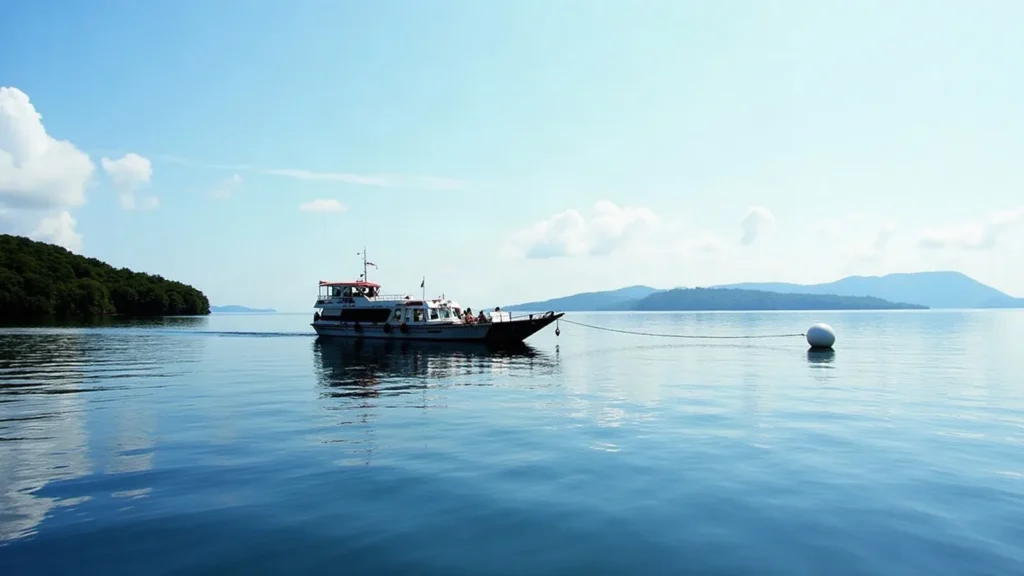
Mooring and anchorage coordination in Raja Ampat means three checks done before you commit a hull: is there a serviceable park buoy at the site, is there clean sand if there is not, and what does the site do in tonight’s wind. The marine park prohibits anchoring on coral, conservation buoys exist at many high-use sites but vary in rating and condition, and the honest answer changes by season and by week. This desk runs those checks against current operator contact — we coordinate moorings and reef-safe stops from Waisai to Misool; we do not own the seabed and no one else does either. WhatsApp +62 811 3941 4563 with your route and dates for a checked plan.
How mooring and anchorage coordination works here
Raja Ampat’s mooring buoys are conservation infrastructure funded by the marine park’s environmental service fees, installed to keep ground tackle off living reef. They are not harbour infrastructure: there is no master list that stays accurate for a season, no universal rating placard, and no berthing master answering channel 16. What replaces all of that is current local knowledge — which buoys are in the water this month, what they are rated for, and which bays have swallowed a mooring in the last blow.
Our coordination is exactly that: before a leg we verify the stops on your plan with operators recently on-site, flag which are buoy stops and which are anchor-only for your tonnage, and where useful arrange a ranger-post or village liaison so your arrival is expected. Where a site fails the checks, we say so and give you the alternative. The wider service context sits in the complete Raja Ampat yacht support guide.
Area by area, Waisai to Misool
| Area | Character | Holding & depth band | Season note |
|---|---|---|---|
| Waisai approaches (Waigeo) | Harbour town, jetties, marina facility | Sand and mud patches, 8–20 m outside the fairway | Workable year-round; watch ferry traffic windows |
| Dampier Strait — Gam bays | Enclosed karst bays, the classic overnight stops | Sand pockets 10–25 m; stern line ashore in tight bays | Good shelter both seasons; current at the entrances |
| Dampier Strait — Kri / Mansuar / Arborek | Resort and dive-site cluster, park buoys present | Buoy-first zone; sand shelves narrow, reef close | Stream runs hard; rig bridles, expect to lie to current |
| Piaynemo | Viewpoint lagoon complex, day-stop traffic | Deep channels, limited sand; buoys at key points | Transitions kindest; NW swell wraps in Dec–Mar |
| Wayag | Northern karst lagoon, ranger post | Sand patches in the lagoon, 8–18 m | Day-anchorage discipline; expedition leg, pick your window |
| Misool south | Karst and reef, village-scale supply only | Reef-pocket sand, 12–30 m; buoys at marquee sites | More exposed in SE season; plan shelter legs ahead |
Treat the table as a planning skeleton, not a chart substitute. Depth bands are what crews actually report at the usable patches; your echo sounder and your eyes on the sand remain the authority on the day.
Coral-safe anchoring inside the marine park
The rule set is simple and enforced: no anchoring on coral or in designated no-anchor zones, sand only where anchoring is permitted, and use the installed mooring where one exists and is sound. Park rangers patrol the high-use sites and can require a vessel to move or issue sanctions for reef damage. Beyond enforcement, most reefs here sit under customary village tenure — how a visiting yacht behaves over a reef is noticed, and it follows the boat around the archipelago.
Practical discipline: arrive with light overhead, read the bottom before you drop, dive the set where visibility allows, and rig your own bridle to a buoy’s eye rather than lying to the pick-up line. If neither a sound buoy nor a clean sand patch exists at a site, that site is not an overnight stop for that hull — the plan moves, not the rule.
Shelter by season
The archipelago’s two wind regimes decide which side of an island you sleep on. In the northwest monsoon, roughly December to March, north- and west-facing stops load up and the Gam bays and southern lees earn their keep. In the southeast season, June to September, Misool’s south coast gets busy with swell and the Dampier Strait’s northern pockets come into their own. The transition months are the most forgiving across the whole map. For the month-by-month regime and passage windows, use the seasons and weather-window page alongside this one.
Booking mooring support, and what it costs
Send the route and dates on WhatsApp and the desk returns a checked stop-list: buoy status per site, anchor-only calls, liaison arranged where useful, all confirmed in writing. Coordination is quoted in USD per scope — a single-site check prices differently from a two-week itinerary with daily verification. Indicative ranges are published openly on the yacht services cost guide. If your plan includes leaving the vessel or taking a jetty window at Waisai, pair this page with the berthing and mooring booking service.
Frequently asked questions
Where are the best anchorages around Gam Island?
The enclosed bays on Gam’s south and east sides are the dependable overnight stops: sand pockets in 10–25 metres with karst shelter on three sides. Several tight bays are stern-line-ashore territory. Which specific bay suits your hull depends on draft and the night’s forecast — that is exactly the check the desk runs before you commit.
Are there public mooring buoys near Kri?
The Kri–Mansuar–Arborek cluster carries park and operator moorings at the high-use sites, installed to protect the reef. They vary in rating and maintenance, and dive boats have working priority at dive-site buoys. Verify the specific buoy’s condition and rating before trusting it overnight — or have us verify it with operators currently on-site.
Can I anchor overnight at Wayag?
Wayag runs on day-anchorage discipline at the marquee lagoon spots, with a ranger post monitoring the area. Overnight arrangements exist at designated patches, and clearing your plan with the ranger post is the difference between a quiet night and being moved on. We arrange that liaison ahead of arrival.
How do I avoid damaging coral when anchoring?
Anchor only on sand you have positively identified — polarised glasses, good overhead light, and where possible a snorkel check of the set. Use park moorings where they exist and are sound. Never drop on structure, and assume every reef has an owner watching, because in Raja Ampat it does.
What is the holding like in the Dampier Strait?
Good in the sand pockets, poor to destructive everywhere else. The strait’s defining force is tidal stream, which frequently overrides wind — vessels lie to current, swinging circles behave oddly, and a set that looked lazy at slack can load hard on the turn. Rig for stream, set a drag alarm, and pick pockets with room.
Can you reserve a mooring ball ahead of arrival?
Where a buoy is operator-maintained, yes — we confirm rating, condition and availability with the maintainer and hold the window. Park buoys at open sites cannot be exclusively reserved, so for those we verify status just before your leg and hold a sand-patch alternative in the plan.
Two journal notes worth reading before you pick up a buoy: how to inspect a mooring buoy before trusting it, and how the four zones of Raja Ampat differ for anchoring.
Plan the call before the passage
Send the vessel LOA, draft, beam, arrival window and the islands you intend to work, and the desk will come back with berthing, mooring and shoreside options that actually exist for that hull in that season. Quotations are issued in USD.