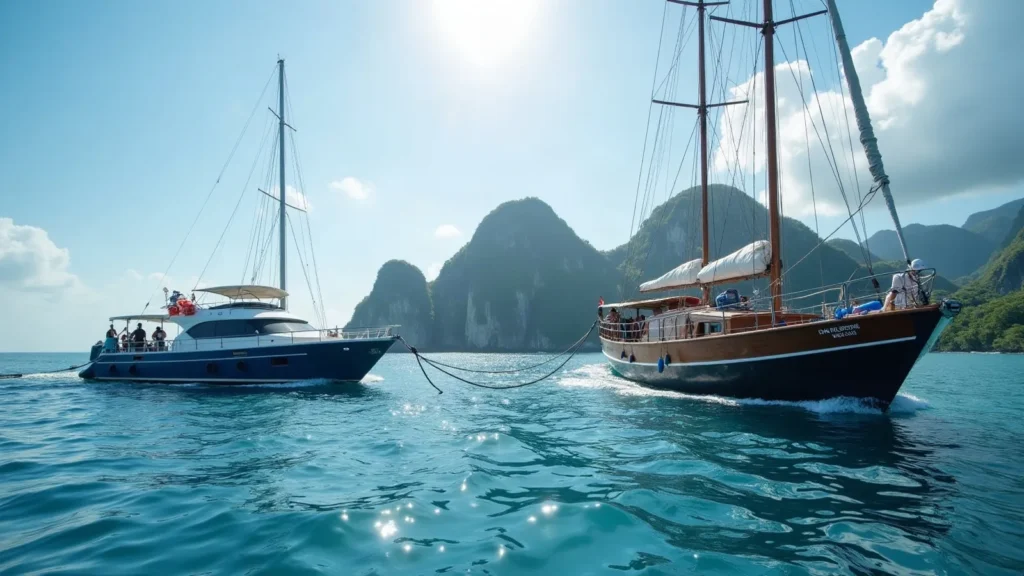
Potable water in Raja Ampat comes from three places: your own watermaker, coordinated top-ups at Sorong, and arranged deliveries at Waisai — not from dockside hoses in the islands, because those do not exist for yachts. Waste runs the other way: everything a vessel generates inside the marine park either leaves on a coordinated shore run or should not be generated at all. This desk arranges water delivery to jetty or anchor, sets tank-hygiene practice worth trusting, and runs trash collection to proper disposal points — quoted in USD on WhatsApp +62 811 3941 4563.
Where water genuinely comes from
Charter and cruising sources for the region are consistent: vessels working Raja Ampat are expected to be water self-sufficient, with watermakers as the primary source once away from Sorong. Nobody advertises potable dock water at island anchorages because there is none to advertise. The working hierarchy for a visiting yacht:
| Source | Reality | Our role |
|---|---|---|
| Onboard watermaker | Primary supply underway; plan membranes and pre-filters before arrival | Consumables on the provisioning run; usage planning |
| Sorong supply | Dock water and tanker/commercial suppliers at the logistics hub | Coordinated fill with quality checks during your Sorong call |
| Waisai delivery | Town supply brought to jetty or out to anchor by arrangement | Scheduled top-ups, drummed or hosed, timed to your window |
| Island villages | Community rainwater and wells — village-scale, not yacht supply | Not offered; we do not draw down village water for yachts |
Water runs usually ride with provisioning logistics — one supply boat, one delivery window — so pair this page with the provisioning and bunkering service when you plan a call.
Quality and tank hygiene
Treat all shore water in eastern Indonesia as untreated until proven otherwise. Sorong town water is not a drinking standard for sensitive crews, and even good source water travels through hoses and drums of unknown history. The practice we hold deliveries to: clean dedicated drums or food-grade hose, visual and taste check at the rail before the tank valve opens, and your inline filtration in circuit. On the vessel side, the regime that keeps tanks honest in the tropics is simple and non-negotiable — filter at the fill, treat the tank on schedule, and run drinking water through its own polish stage. Many crews tank shore water for washdown and showers and keep the watermaker for the galley; that split works well here.
Trash, greywater and blackwater inside a conservation area
Raja Ampat is a managed marine protected area funded by the entry fees every visitor pays; a visiting yacht’s waste discipline is part of the deal, and rangers and villages both notice the vessels that get it wrong. The standing rules of good practice: nothing over the side, ever, inside the park — no galley scraps on the reef, no bagged trash “dropped at a village” uninvited. Greywater discharges only well away from reefs, lagoons and village waters, with tank-and-carry the courteous standard in enclosed bays. Blackwater holds until open water well clear of the protected sites, or lands ashore where facilities exist at the Sorong end. None of this is exotic — it is MARPOL instinct applied inside a park that people paid to protect.
Collection runs and disposal points
The desk’s waste service is a scheduled collection: segregated bags off your deck onto a supply boat at Waisai or a working anchorage, landed to proper municipal disposal at Waisai or Sorong — not to a beach pit. On turnaround days the collection rides the same boat as the provisioning delivery, which is the economical way to do it. For longer expedition legs south to Misool we plan waste capacity like fuel: what you generate, what you hold, where it lands, written into the leg plan before you sail.
Costs and booking
Water delivery is priced by volume and distance; waste collection by load and landing point; both are quoted in USD as fixed line items, with typical ranges published in the yacht services cost guide. For a single top-up, message the desk a day ahead. For a season, standing water-and-waste service on your turnaround schedule is contracted once and runs itself — the same rhythm described across the full yacht support guide.
Frequently asked questions
Can I refill potable water at the marina in Waisai?
The Meridian Adventure Marina facility has services for its berthed vessels, confirmed case by case when a berth is booked. For everyone else, water at Waisai is an arranged delivery to the jetty or out to anchor — town supply, moved in clean drums or by hose, checked at your rail. There is no public potable dock hose to sail up to.
Where should yachts dispose of trash in Raja Ampat?
Ashore at proper disposal points in Waisai or Sorong — and practically, via a coordinated collection run, because island villages have no capacity to absorb yacht waste. Segregate on board, bag it, and we take it off on the next supply boat. Nothing goes over the side inside the park.
Are there greywater discharge rules in the marine park?
The park’s framework prohibits pollution of protected waters, and the accepted working practice is: no greywater discharge near reefs, lagoons or village frontage; hold and release only well clear in open water, or land it where facilities exist. In tight karst bays, tank-and-carry is the standard we recommend and plan for.
Is Sorong tap water safe for yacht tanks?
For washdown and showers, yes with sensible filtration. For drinking, treat it: filter at the fill, treat the tank, and polish at the galley — or keep drinking water on the watermaker. We hold deliveries to clean-container standards so what reaches your rail is as good as the source allows, and you check it before the valve opens.
Do you arrange water delivery to anchor?
Yes — drummed or hosed from a supply boat, at Waisai and the working anchorages, priced by volume and distance and usually combined with a provisioning or waste run to share the boat cost. A day’s notice covers most requests; expedition legs get water written into the plan.
Why waste discipline matters more here than almost anywhere else afloat: waste management in a marine protected area.
Plan the call before the passage
Send the vessel LOA, draft, beam, arrival window and the islands you intend to work, and the desk will come back with berthing, mooring and shoreside options that actually exist for that hull in that season. Quotations are issued in USD.