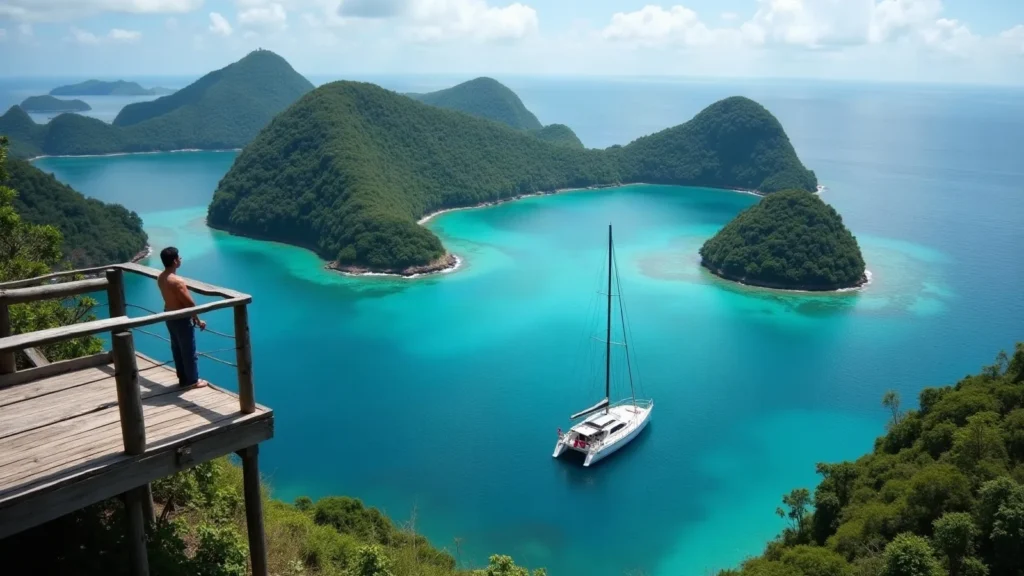
This is the answer index for yacht crews planning Raja Ampat: moorings and anchorages, clearance and permits, provisioning and fuel, water and waste, transfers and turnaround, seasons and safety, and costs — each answered short here, each linked to its deep page. If the question is specific to your vessel and dates, skip the reading: the desk answers on WhatsApp +62 811 3941 4563, usually the same day.
Moorings & anchorages
Is Raja Ampat an anchorage or a marina destination?
An anchorage destination, definitively. One physical marina exists — Meridian Adventure Marina at Waisai, for small to mid vessels — and everything else is sand patches, conservation buoys and jetty windows. The working map is the moorings and anchorages guide.
Can I trust the mooring buoys?
Only after checking rating and condition: buoys here are conservation infrastructure of varying maintenance, sized for the traffic they were installed for. Verify before you commit a hull, or have the desk verify with operators currently on-site.
Is anchoring allowed inside the marine park?
On sand, in permitted areas, yes; on coral or in no-anchor zones, no — and rangers patrol the high-use sites. Where a sound buoy exists, use it instead of ground tackle.
Clearance & permits
Do I need a sailing permit for Raja Ampat?
Not the old one: the classic paper CAIT is no longer required for foreign private yachts. What remains is standard port clearance at Sorong — Quarantine, Immigration, Customs, Harbourmaster — plus personal marine park and regency entry cards. Process detail: the clearance and agency page.
What permits do the people on board need?
Everyone aged 12 and over needs the marine park entry card (TLPJL, IDR 700,000 international / 425,000 Indonesian, 12-month validity per the official park tariff) and the regency tourist pass (IDR 1,000,000 per foreign visit after the January 2026 revision). Cards are personal, carried aboard, checked by rangers.
Can the whole clearance be delegated?
Nearly all of it: pre-notification, forms, sequencing, fee payment and card registration run through vessel-side agency; your part is signatures and the occasional inspection. That is the time an agent buys.
Provisioning & fuel
Where should I stock up before Raja Ampat?
Sorong — markets, supermarkets, wholesalers and diesel are all there, which is why the entire liveaboard fleet provisions there before entering the park. Waisai handles fresh top-ups only. Planning detail: the provisioning and bunkering page.
Is fuel available inside the islands?
Only in small quantities at Waisai and village scale beyond. Volume bunkering happens at the Sorong end, with filtered transfer as standing practice — order days ahead, more for volume.
Water & waste
Where does drinking water come from out here?
Your watermaker first, coordinated fills at Sorong, arranged deliveries at Waisai — there is no potable dock hose in the islands. Tank-hygiene practice and delivery standards: the water and waste page.
What do I do with garbage on a three-week cruise?
Segregate aboard and land it through coordinated collection runs to proper disposal at Waisai or Sorong. Villages cannot absorb yacht waste, and nothing goes over the side inside the park.
Transfers & turnaround
How do people reach a boat in Raja Ampat?
Fly to Sorong DEO, then the fast ferry to Waisai — about two hours, normally 09:00 and 14:00 sailings — or a private speedboat, then jetty or direct-to-anchor boarding. The full chain, with immigration liaison for crew, is on the crew change and transfers page.
Who runs turnaround days for charter boats?
This desk coordinates them end to end — jetty windows, deliveries, guest rotations on one clock — per call or as a seasonal base-port package; see tender and turnaround support.
Seasons & safety
Is Raja Ampat safe for visiting yachts?
Yes, by any cruising standard: no cyclones (the archipelago sits outside the belt), no closed season, monsoon-driven weather that rewards ordinary seamanship, and a security picture that is calm. The real risks are reef navigation and self-inflicted anchoring errors. Season logic: the seasons and passage page.
When is the best time to come?
The transitions — April–May and October–November — for the calmest all-around conditions; June–September for the steady SE-season high season; December–March works with southern-lee discipline.
What about medical emergencies?
Sorong holds the region’s hospitals and the airport; serious cases evacuate onward to Makassar or Jakarta. Sensible expedition planning treats Sorong as the medical fallback and keeps evacuation insurance current.
Costs & booking
What does yacht support cost here?
Coordination is quoted per scope in USD — indicative ranges are published openly on the cost guide — and official IDR fees pass through at cost with receipts. No packages required, no price games played.
How far is Waisai from Sorong?
Roughly two hours by fast ferry across the Dampier Strait, twice daily on the standard 09:00/14:00 pattern, or a private speedboat on your own schedule.
Who do I contact for a same-day answer?
The Raja Ampat Marina desk: WhatsApp +62 811 3941 4563 or bd@juaraholding.com — vessel, dates and question in the first message gets the fastest answer. Full routes are on the contact page, and the service overview is the complete support guide.
One question deserves its own essay: why Raja Ampat has no superyacht marina — and why that is unlikely to change soon.
Plan the call before the passage
Send the vessel LOA, draft, beam, arrival window and the islands you intend to work, and the desk will come back with berthing, mooring and shoreside options that actually exist for that hull in that season. Quotations are issued in USD.