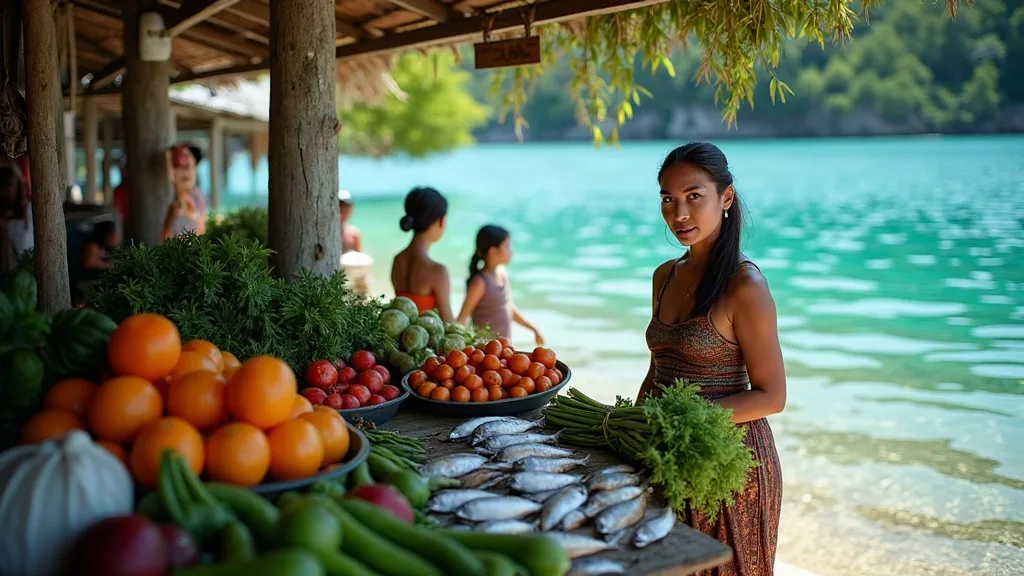
Waisai reliably supplies fresh fish, basic vegetables, tropical fruit, rice, eggs and everyday staples. It does not supply the range, consistency or specialty items a yacht galley used to Bali or the Mediterranean assumes. Anything imported, chilled through a cold chain, or specific — wine, cheese, cuts of meat, dietary substitutes, quality coffee — comes from Sorong at best and more realistically from Makassar, Jakarta or your own stores. Plan menus around what exists rather than sending a shopping list into a place that cannot fill it.
What Waisai does well
Fish is the standout, and it is genuinely excellent. Buying directly from village fishermen, where the relationship allows, gives you fish that was swimming that morning at a price that reflects a local economy rather than a tourist one. It is the single best provisioning opportunity in Raja Ampat and it is one many visiting yachts underuse because they arrive with a menu plan already fixed.
Beyond that, the market and shops cover the working basics of an Indonesian kitchen: rice, noodles, eggs, onions, garlic, chillies, root vegetables, bananas and other tropical fruit, cooking oil, sugar, salt, tea and instant coffee. Supply varies with the ferry schedule, so the market on the day after a boat is better than the day before one.
What it does not do
| Category | Reality |
|---|---|
| Fresh dairy, cheese, butter | Very limited and cold-chain dependent. Bring it or accept substitutes. |
| Quality meat cuts | Not reliably available. Load frozen in Sorong or earlier. |
| Wine and spirits | Do not plan on local supply. Load before the region, mindful of Indonesian import and duty rules. |
| Leafy salads and delicate produce | Intermittent and short-lived in the heat. Plan robust vegetables instead. |
| Gluten-free, allergen-specific, infant formula | Bring the entire requirement. Do not assume any substitute exists. |
| Specialty coffee, baking supplies | Bring them. |
Load in Sorong, top up in Waisai
The pattern that works mirrors the fuel pattern described in the piece on bunkering from Sorong: the mainland is the depot, the island is the top-up. Sorong has larger supermarkets, a wider range, better frozen and chilled supply and the ability to receive freight from Makassar and Jakarta with lead time.
Do the bulk load there, through an agent if the volume is significant, and give real lead time for anything that has to be flown or shipped in. Then use Waisai for fresh top-ups on the days the itinerary brings you past, which the hub-and-spoke shape described in the cruising guide naturally does.
De-box before you leave the mainland
This is the single most useful provisioning habit for a marine protected area. Every carton, plastic wrapper and tray you bring into Raja Ampat is waste you must carry back out, because there is no reception facility in the islands and leaving it with a village is not a solution — it is transferring your problem to people with fewer options.
So strip packaging in Sorong. Decant into reusable containers, remove cardboard, consolidate. It reduces waste volume dramatically, it saves stowage space, and it avoids importing cockroaches in cardboard, which is a real and unglamorous benefit. The waste side of this is covered on the facilities page.
Storage in the heat
Equatorial heat and humidity shorten everything. Root vegetables and hard fruit travel well; leafy things do not. Bread moulds fast. Anything vacuum-packed and frozen at the start of a programme is worth more than the same item chilled.
Practical measures: freeze what you can before departure, keep the fridge and freezer full rather than half empty, ventilate dry stores, check regularly for spoilage rather than discovering it, and plan the menu so that the perishable items are eaten in the first days and the robust ones carry the back half of the trip.
Buying from villages the right way
Fresh fish, fruit and sometimes vegetables can be bought directly from communities, and doing so puts money into the local economy in the most direct way available to a visiting yacht. It is also a relationship, not a transaction.
Ask before you assume, pay a fair price without haggling aggressively over amounts that are trivial to you and meaningful to them, and do not create expectations you cannot meet at the next village. Where there is a chance to buy from a community rather than from a shop, take it — the goodwill it generates is the same goodwill that produces local knowledge, shore access and help when something goes wrong, as described on the landings and access page.
Setting guest expectations
A charter guest who has been told that Raja Ampat is remote and that the galley will do extraordinary things with extraordinary fish is delighted. A guest who was promised the same menu they would get in Bali is disappointed by an objectively excellent meal.
Brief it at booking. The honest framing is that the food will be fresher and more local than anywhere they have eaten, and less varied in imported items, because the place is genuinely remote and that remoteness is why they came.
Working with the ferry rhythm
Supply into Waisai arrives by sea, so the market’s range follows the boat schedule rather than the calendar. The day after a delivery, the choice is noticeably better; two or three days later, the fresh items thin out. Crews that ask locally when the next boat is due, and time their provisioning call to it, consistently eat better than crews that arrive whenever the itinerary happens to bring them past.
The same rhythm affects anything ordered in. If a specific item has to come from Sorong or beyond, it travels on that boat, which means the lead time is not a number of days but the next sailing plus handling. Ask for the sailing, not the estimate. This is the same logistics pattern that governs fuel, described in bunkering from Sorong, and crew movements, described in crew rotations through Sorong.
A word on water and ice
Ice is available in Waisai in the block form the fishing fleet uses, and it is genuinely useful for keeping fish and produce in a hot galley. It is not made from water you should drink, and it should not go into glasses. Keep the vessel’s own drinking water entirely separate, made by the watermaker and stored in tanks you control, as covered on the facilities page.
Frequently asked questions
What food can you buy in Waisai?
Fresh fish, tropical fruit, root and hard vegetables, rice, noodles, eggs and everyday Indonesian staples are reliably available, with supply varying around the ferry schedule. Dairy, quality meat cuts, wine, delicate salads and any specialty or allergen-specific items should be loaded in Sorong or earlier.
Should I provision in Sorong or Waisai?
Both, in that order. Do the bulk load in Sorong where the range, frozen supply and freight options exist, then use Waisai for fresh top-ups when the itinerary brings the vessel past. Strip packaging in Sorong to reduce the waste you must carry back out.
Talk to the berthing desk
Raja Ampat rewards vessels that arrive with a plan. Share your LOA, draft, arrival window and intended islands, and we will answer with what is realistically available. Quotations in USD.